 Safeguarding
 Find a church
 Find clergy

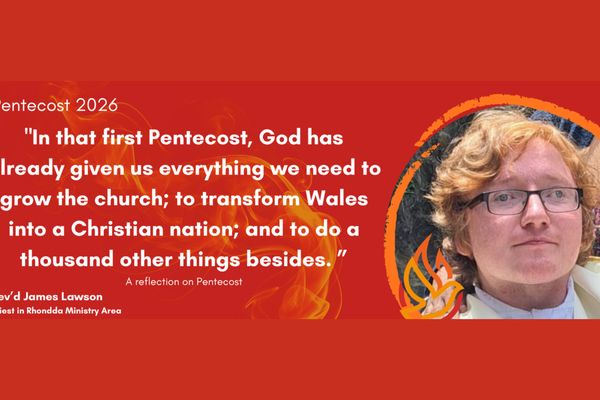
Rev'd James Lawson, priest in Rhondda Ministry Area, reflects on Pentecost.
A few years ago, I was lucky enough to be given the opportunity to attend the 11th assembly of the World Council of Churches. Some of my most abiding memories from that week are the times we spent in worship, especially the times when all of the assembly delegates and participants gathered in one space. I remember wondering at one point – as myself; a Roman Catholic cardinal; a Mar Thoma bishop; a Lutheran pastor; and the Coptic bishop for Florida all sat in the same row and sang ‘A mighty fortress is our God’ – if this was perhaps what the worship in heaven would be like. So many people, from so many different backgrounds and traditions, all worshipping God together.
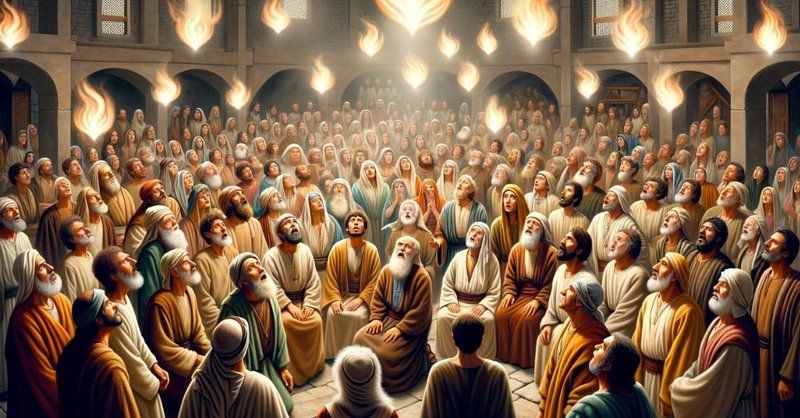
This week, I find myself wondering if perhaps the events that we now commemorate at the feast of Pentecost had a similar atmosphere. In the account of those events in the second chapter of the book of Acts, we find a great list of all the different peoples who miraculously hear the disciples preaching ‘each of us, in our own native language’: ‘Parthians, Medes, Elamites, and residents of Mesopotamia, Judea and Cappadocia, Pontus and Asia, Phrygia and Pamphylia, Egypt and the parts of Libya belonging to Cyrene, and visitors from Rome, both Jews and proselytes, Cretans and Arabs’ (vv. 8-9). Aside from functioning as a notorious impromptu literacy test for those who are on the parish reading rota for Pentecost, the point of this list (as numerous commentators have pointed out) is its universality.
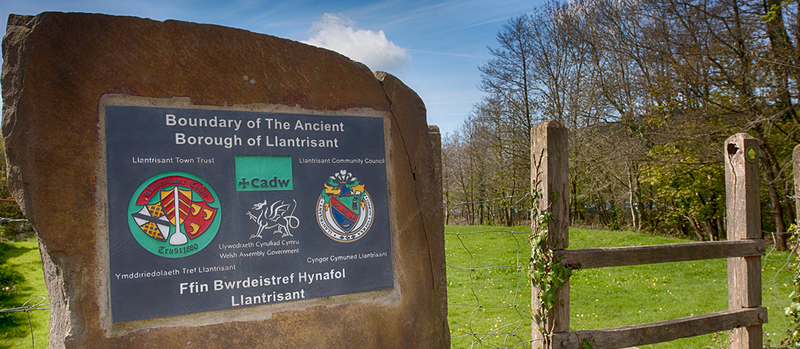
The disciples are now experiencing the fulfilment of the promise that they received from Jesus at His ascension, that the Holy Spirit will enable them to ‘be my witnesses in Jerusalem, in all Judea and Samaria, and to the ends of the earth’ (Acts 1:8). We in Wales are, it perhaps does not need pointing out, the direct beneficiaries of that powerful witness, living as we do in a place that would quite literally have seemed ‘the end of the earth’ to those first disciples. We are surrounded in our diocese by reminders of those early pioneers and perfecters of our faith who may have first preached in early Brythonic (the precursor of modern Welsh): in the churches dedicated to Dewi, Illtud and other great saints; in the monastic centre of Llantwit Fadre and others; in the very way we describe the places around us – ‘the place of three saints’ (Llantrisant, if you are wondering!)
Faced with this impressive inheritance, it can be tempting to see our role as that of maintainers rather than missionaries. We can see ourselves as staunch defenders of the faith, manning the bulwarks against an invading horde seeking to demolish our heritage. This is certainly imagery which seems to have a great deal of resonance in our political and public discourse at the moment. Yet I find myself wondering if we are not missing something here.
We tend to view conversion into faith as a single, precise experience; rather like that famously narrated by Wesley who on 24th May 1738 ‘in the evening…about a quarter before nine’ felt his ‘heart strangely warmed’. That is far from unhelpful or wrong, but it is also far from the whole picture. When Benedictine monks begin on their way of life, one of the things they promise to pursue is ‘conversion’. Rather odd, one might think: surely someone who has decided to spend their life in a monastery has already ‘converted’ to faith in a rather serious and far-reaching way. Yet what this tradition recognises is that – as well as being a singular event – conversion is also a life-long endeavour. It is simply not enough to receive faith as a one-time gift, something we can tick off the ‘to-do’ list and then move on with our lives. Instead, it is something that we must consciously choose every day; every morning, in a sense, brings a fresh chance for conversion, for (literally) turning ourselves towards God.

As in our individual lives, so in our common life. The great theologian of political ethics Oliver O’Donovan makes precisely this point when he reflects on the ideal of Christendom and its place in our history. Christendom loses its way, he argues, when the conversion of society and its rulers is seen as completed, as something about which we no longer need to think because it has already happened. Yet the picture looks startlingly different if we look at conversion as an ongoing process. Then we start to see Christendom not as a static way of describing a particular arrangement of church-state relations but as a call for the continuous transformation of our common life in the light of the perfection of the kingdom of God. From this point of view, our collective calling as the church is not to pull up the drawbridge and shore up the ramparts of the faith against the powers outside. Rather, we are to be the leaven in the dough, helping the society of which we are a part to rise to its full, God-given potential.
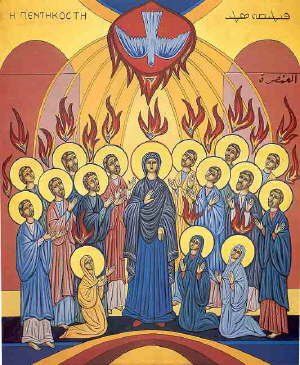
Yet – to twist this metaphor more than it deserves – without divine help we remain simple particles of flour, stuck in a soggy mess and indistinguishable from those around us. Which brings us back to Pentecost and the gift of the Holy Spirit. Like conversion; like the gift of faith; this is not a gift that is simply given once, or as a limited time offer. We can, should, and must always seek the gift of the Holy Spirit because without Him we cannot hope to achieve anything very much in the way of witnessing or mission. As so often, Jesus Himself spells it out for us: ‘you will receive power when the Holy Spirit has come upon you; and you will be my witnesses’ (Acts 1:8).
In that first Pentecost, God has already given us everything we need to grow the church; to transform Wales into a Christian nation; and to do a thousand other things besides. He has given us nothing less than Himself, in the person of the Holy Spirit, to be with us and to act through us for the continual conversion of the world. The only question we really face, then, is whether we are brave enough to get out of His way and allow Him to use us in this way, so that, once again, people ‘from every nation under heaven’ (Acts 2.5) can hear His voice in their own language and to embark upon the life-long adventure of conversion and faith.